
Home Remodeling

Comparison of a cramped, outdated bathroom and a modern remodeled bathroom showing solutions for small bathroom issues in San Diego, CA

Small Bathroom Issues: Why Your Space Never Feels Right

Quick Summary Small bathroom issues make your mornings harder, not just your space tighter. In San Diego, hidden leaks, summer humidity, outdated layouts, and poor storage are the top culprits. Therefore, most problems are fixable without a full addition. This guide shows you how to diagnose the cause and choose smart, local solutions. Does Your Bathroom Work Against You Every Day? If your bathroom feels cramped no matter how much you clean, you are not alone. Many San Diego homeowners deal with small bathroom issues that make daily routines stressful. You bump the vanity, the door hits the toilet, and the mirror fogs for an hour. In addition, as we move from late spring into summer, hidden moisture starts to show. Last week, we talked about “Walk-In Shower vs Tub: What San Diego Homeowners Prefer”, and many of you asked what to do when the whole space just feels wrong. After all, a new shower will not help if the layout fights you. So let’s diagnose why small bathrooms feel off, and what actually fixes them. Small Bathroom Issues Start With Hidden Leaks First, leaks are sneaky. Because small bathrooms hide pipes behind tight walls, a slow drip can go unnoticed for months. Meanwhile, you just feel dampness or see paint bubbling. In many cases, these small bathroom issues start under the toilet flange or inside the shower valve. For example, we see this often in 1970s homes in Clairemont where original copper pipes are tired. As a result, water seeps into the subfloor and swells the baseboards. Warning Signs Checklist: Musty smell that returns after cleaning Grout that stays dark even when dry Soft spot near the toilet or tub Water bill creeping up with no clear reason Peeling paint on the ceiling below the bath Next, call a pro if you spot two or more. If you ignore it, a small leak today can become mold and rot by August. Small Bathroom Issues Get Worse With Summer Humidity and Mold San Diego summers bring more than sun. Coastal marine layer and late-spring humidity trap moisture in small bathrooms with poor fans. Therefore, mold loves these spaces. Although our climate is dry overall, small bathrooms in Pacific Beach and Point Loma get sticky in June and July. Since most older homes have a weak 50 CFM fan, steam sits for 30 minutes after a shower. After that, mold grows behind the vanity and inside the drywall. Quick Facts: Summer Moisture Mold can start in 24-48 hours on damp drywall A proper fan should run 20 minutes after showers San Diego building code now requires 110 CFM for new remodels under 100 sq ft Bleach does not kill mold in grout; it just bleaches it On the other hand, a good remodel solves this at the source. We install humidity-sensing fans, waterproof backer board, and sealed niches. As a result, your bathroom stays dry even during the muggiest weeks. Small Bathroom Issues Caused by Outdated Layouts As a result, most small bathroom issues we see in older San Diego homes come from layouts designed 60 years ago. First, builders squeezed a tub, toilet, and pedestal sink into 35 square feet. Then families grew, but the room did not. Because of this, you get classic small bathroom problems. The door swings into the vanity. The toilet sits too close to the tub. There is no storage, so counters stay cluttered. In addition, North Park and Kensington bungalows often have the plumbing on an exterior wall. That limits options, but it does not make it impossible. For example, we recently changed the layout in a 1940s University Heights home. We moved the vanity to a dead corner, replaced the tub with a curbless shower, and gained 18 inches of floor space. Since San Diego requires permits to move plumbing, we handle that for you. Meanwhile, you get a layout that works for real life, not for 1955. Small Bathroom Issues With Poor Functionality and Storage Even a clean bathroom feels wrong if it does not function. That is where small bathrooms fail most. You have nowhere for towels, no outlet near the mirror, and one dim light. Diagnose Your Functionality: Open the door fully. Does it hit anything? Stand at the sink. Can two people pass behind you? Count your storage. Do you use the tub ledge as a shelf? Check lighting. Do you see shadows on your face? If you answered yes to two or more, your layout needs help, not just new tile. Therefore, smart storage beats square footage. Smart Storage Fixes We Use: Recessed medicine cabinets with outlets inside Floating vanities that show more floor space Tall, shallow linen towers built into wall cavities Shower niches instead of caddies Because every inch matters, we design in 3D first. Then you see the fix before we build it. Smart Fixes for Small Bathroom Issues in San Diego Homes Since every home is different, we tailor solutions so your small bathroom issues do not return next summer. However, most fixes fall into three buckets. In addition, bathroom remodeling in San Diego often costs less than homeowners expect when you fix the core issue first. For example, a targeted remodel runs $12,000-$18,000, while a full gut with layout change runs $22,000-$30,000. On the other hand, a room addition is rarely needed for small bathrooms. Since we maximize existing space, you save on foundation and permits. Finally, good design makes small bathrooms feel twice as big. We use large-format tile, frameless glass, and wall-mounted fixtures to open sightlines. FAQ: Real Questions About Small Bathroom Issues 1. Why does my small bathroom smell musty every summer? Because warm, humid air gets trapped. Even a small leak or a weak fan keeps moisture above 60%. Therefore, we test for leaks, upgrade ventilation, and seal grout. After that, the smell is gone. 2. Can I expand a small bathroom without a room addition? Yes, in many cases. We borrow space from a hallway closet, a

Small Bathroom Issues: Why Your Space Never Feels Right Read More »

Modern bathroom with a walk-in shower and freestanding tub, showing walk-in shower vs tub comparison for San Diego homeowners considering bathroom remodels.

Walk-In Shower vs Tub: What San Diego Homeowners Prefer

Quick Summary Choosing between a walk-in shower vs tub is one of the biggest decisions in a San Diego bathroom remodeling project. In fact, many homeowners in Mission Valley, La Jolla, and Chula Vista are swapping tubs for sleek custom shower remodels to save space and boost accessibility. Yet tubs still win for families with kids and for resale in certain neighborhoods. Here’s what San Diego homeowners prefer, plus cost, comfort, and value breakdowns to help you decide. Tired of That Old Tub? Here’s What San Diego Homeowners Are Choosing Instead Does your bathroom feel cramped, outdated, or hard to use? Maybe you’re stepping over a high tub wall every morning in your North Park bungalow, or you’re eyeing that unused garden tub in your Carmel Valley home and wondering if it’s wasted space. If you’re asking, “Is a walk-in shower or tub better?”, you’re not alone. San Diego homeowners are rethinking their bathrooms to fit coastal living, aging in place, and busy family life.   The walk-in shower vs tub debate comes down to lifestyle, budget, and long-term plans. At Falcon Builders Group, we have completed hundreds of bathroom remodeling projects from Pacific Beach to El Cajon. We have seen firsthand how the right choice can make your mornings easier and add real value to your home. So let’s break it down, neighbor to neighbor.   From cost to comfort, we’ll help you weigh your options so you can remodel with confidence. And if you’re still torn, we will share what most San Diego homeowners are actually picking in 2026. Walk-In Shower vs Tub: Which One Is Better for Your Home? San Diego living is all about ease. We surf in Ocean Beach before work, hike Torrey Pines on weekends, and host friends for tacos in our backyard. After all, your bathroom should match that lifestyle. A walk-in shower offers quick, no-fuss access. A tub, on the other hand, offers relaxation and family function. So which one fits your life today and five years from now?   Why this matters locally: San Diego’s housing stock is a mix. We see 1920s Spanish homes in Kensington with tiny original baths, 1980s tubs in Mira Mesa, and new builds in Otay Ranch with massive master suites. Plus, with our aging population in areas like Point Loma and Scripps Ranch, accessibility is a huge factor. That is why the walk-in shower vs tub choice isn’t just design—it’s practical.   Now that you know why this decision is so big here in San Diego, let’s look at how homeowners are using each option day to day. Walk-In Shower vs Tub: Daily Comfort and Lifestyle Fit Think about your morning routine. Are you rushing out the door to beat traffic on the 805, or do you love a long soak after a Padres game? Your daily habits should guide you.   Walk-in shower benefits for San Diego living 1. Fast and accessible: No step-over curb means safer entry for kids, adults, and seniors. That is a win if you plan to age in place in your Clairemont home.   2. Space saver: Removing a bulky tub opens up small baths in Golden Hill or Normal Heights. You can add double vanities or more storage.   3. Modern look: Frameless glass and tile create that clean, coastal vibe buyers love in Del Mar and Encinitas.   4. Low maintenance: Less scrubbing than a jetted tub. Great after a sandy day at La Jolla Shores. Tub benefits that still matter 1. Family friendly: If you have toddlers, bath time is easier in a tub. No wonder many families still keep at least one tub for this reason.   2. Relaxation: A deep soaker tub helps sore muscles after hiking Cowles Mountain.   3. Resale flexibility: Realtors often suggest keeping one tub in the home for market appeal. So, is a walk-in shower or tub better? For speed and accessibility, showers win. For kids and soaking, tubs still have a place. Up next, let’s talk money—because budget drives most San Diego remodels. Shower Installation vs Tub: Cost Breakdown for San Diego Homes Budget is real, and we get it. Bathroom remodeling in San Diego, CA, ranges widely based on materials, plumbing, and size. Here’s how walk-in shower vs tub projects usually compare.   Option Problem It Solves Average Cost in San Diego Timeline Urgency Level Basic tub-to-shower conversion Removes unsafe step-over, updates old tile $6,500 – $9,500 3-5 days High if mobility is a concern Custom shower remodel Adds luxury, improves the small layout $12,000 – $25,000+ 1-2 weeks Medium – plan ahead for tile lead times New tub installation Keeps family function, replaces the cracked unit $4,000 – $8,000 2-4 days Medium – depends on leaks/damage Wet room walk-in shower Full accessibility, high-end design $18,000 – $35,000+ 2-3 weeks Low – usually a want, not a need Once you know the numbers, the next question is value. Will you get that money back when you sell? Walk-In Shower vs Tub: Resale Value and What Buyers Want We talk to San Diego Realtors every week, and here’s the trend: buyers want at least one bathtub in the house, but they love a luxury primary walk-in shower.   Quick Facts: San Diego Resale Snapshot Homes with a primary walk-in shower sell 9 days faster on average in Carmel Valley and Rancho Bernardo, per 2025 SDAR data. Keeping one tub helps family buyers. Removing the only tub can shrink your buyer pool in areas like Rancho Peñasquitos. ROI for a custom shower remodel: 60–70% in upscale neighborhoods like La Jolla and Coronado. Universal design features like curbless walk-in shower entries add appeal for 55+ buyers in Escondido and San Carlos. So if you have two bathrooms, the winning combo is often a tub in the hall bath and a walk-in shower in the primary. If you only have one bath, think hard before ditching the tub.   With resale covered, let’s check a few warning signs that it’s time to remodel now. Walk-In Shower vs Tub: Warning Signs You Need a Change Not

Walk-In Shower vs Tub: What San Diego Homeowners Prefer Read More »

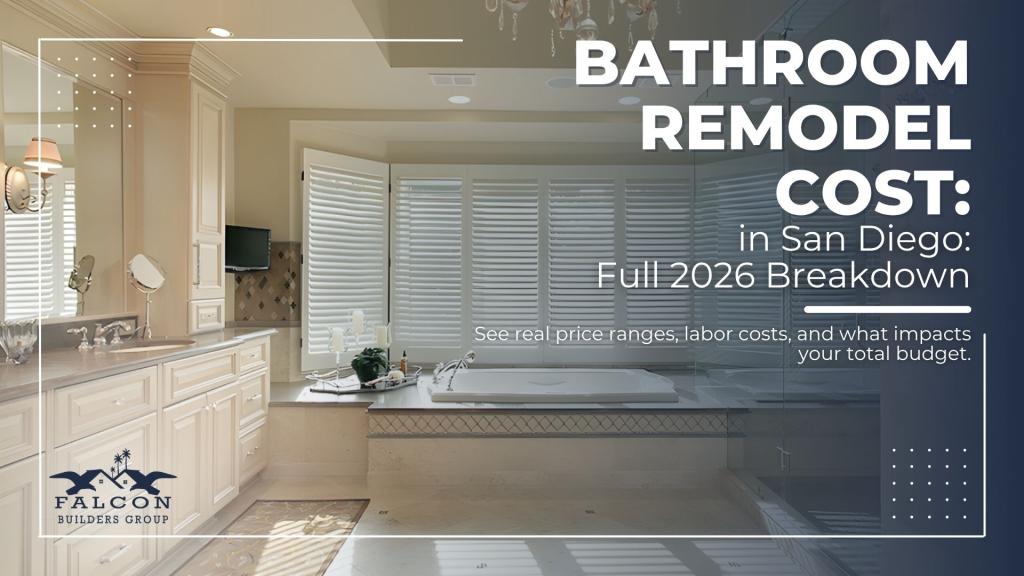
Bathroom remodel cost guide in San Diego featuring a luxury bathroom with custom cabinets and soaking tub

Bathroom Remodel Cost in San Diego: Full 2026 Breakdown

You walk into your bathroom every day and notice the same problems. The shower feels cramped. Your small vanity has little storage. The old tile makes the room feel dark and outdated. Then one question starts coming up again and again: “What is the real bathroom remodel cost in San Diego right now?” Many homeowners start looking at design ideas before thinking about budget. Then the numbers start adding up. Labor, permits, plumbing, tile, and hidden repairs can change the total price fast if the project is not planned the right way. That is why understanding bathroom remodel cost before construction starts can save homeowners stress, delays, and expensive surprises later. Whether you own a coastal condo near Pacific Beach or a family home in Rancho Bernardo, knowing what affects pricing helps you make smarter remodeling decisions from the start. Quick Summary: Bathroom Remodel Cost in San Diego As expected, the actual remodel cost still depends on the size of the bathroom, material selections, labor, plumbing changes, and the condition of the home. In most cases, cosmetic updates start around $12,000, while larger custom remodels may exceed $40,000. Thus, planning early helps homeowners avoid budget problems and make better long-term choices. Why Bathroom Remodel Cost Changes From Home to Home Many homeowners ask why remodeling prices vary so much between projects. The answer usually comes down to the condition of the space and the type of upgrades involved. For example, a newer condo near Downtown San Diego may only need cosmetic improvements. Meanwhile, an older home in North Park or Point Loma may need plumbing upgrades, ventilation corrections, or structural repairs behind the walls. Before setting a remodeling budget, homeowners should understand the biggest factors that affect the cost: Bathroom size Plumbing changes Finish quality Electrical work Permit fees Labor requirements Structural or water damage repairs As mentioned earlier, smaller cosmetic updates often stay within a lower budget range. On the other hand, custom layouts and luxury materials typically increase both labor time and overall project cost. Because of this, early planning plays a major role in controlling expenses. Bathroom Remodel Cost by Project Type Not every remodel requires a full demolition. While some homeowners want a fresh new look, others need major layout changes to improve daily function. Understanding the different remodeling levels helps homeowners set more realistic expectations before construction begins. Cosmetic Bathroom Remodel A cosmetic remodel focuses on surface-level improvements without changing the layout. These projects often include: New paint Updated fixtures Vanity replacement New lighting Minor tile upgrades Estimated Cost: $12,000–$18,000 This option works well for homeowners preparing to sell or updating older finishes without major structural work. Once cosmetic improvements no longer solve the problem, homeowners often move into mid-range remodeling projects. Mid-Range Bathroom Remodel Mid-range remodels improve both appearance and function. This is one of the most common bathroom remodeling San Diego projects homeowners request today. These remodels may include: Shower replacement New flooring Updated cabinetry Improved lighting Better storage solutions Estimated Cost: $20,000–$35,000 Homeowners in neighborhoods like Clairemont and Mission Valley often choose this remodeling level because it balances comfort, appearance, and long-term value. Larger luxury remodels usually involve more customization and higher-end materials. Luxury Bathroom Remodel Another type is luxury remodels, which focus on premium finishes, spa-like comfort, and custom design work. These projects may include: Walk-in showers Heated flooring Custom tile patterns Frameless glass Freestanding tubs Smart mirrors Designer fixtures Estimated Cost: $40,000+ Homes in La Jolla, Del Mar, and Rancho Santa Fe often include luxury bathroom upgrades designed for long-term comfort and resale appeal. Now that homeowners understand the different project levels, it helps to see where most of the budget actually goes. Bathroom Remodel Cost Breakdown by Category Many people think materials take the largest portion of the budget. In reality, labor often becomes the biggest expense during bathroom renovation projects. Here is a simplified cost breakdown homeowners can expect: Remodeling Element Average Cost Range Demolition $1,000–$3,000 Plumbing $2,000–$8,000 Electrical $1,500–$5,000 Tile Installation $3,000–$10,000 Vanity & Cabinets $2,000–$8,000 Shower or Tub $3,000–$12,000 Permits $500–$2,500 Labor 40%–60% of the total budget Labor costs often increase when projects involve plumbing relocation, custom tile work, or structural repairs. That leads homeowners to another important question: what hidden issues increase bathroom remodel cost? Hidden Problems That Increase Bathroom Remodel Cost Some of the biggest remodeling expenses stay hidden until demolition begins. This situation happens often in older San Diego homes. Have you ever removed old tile and discovered moisture damage underneath? Many homeowners do not realize problems exist until walls are opened. Common hidden repairs include: Water damage Mold growth Outdated plumbing Improper wiring Weak subflooring Ventilation issues Homes near coastal areas like Ocean Beach and Pacific Beach often experience long-term moisture exposure because of salt air and humidity. That is why experienced general contractors San Diego homeowners trust usually recommend setting aside an extra 10–15% emergency budget for unexpected repairs. Indeed, planning for hidden issues early helps reduce stress once construction begins. How Material Choices Affect Bathroom Remodel Cost Material selection changes pricing faster than most homeowners expect. Two bathrooms can have the same layout and still have very different budgets based on finish selections alone. Budget-Friendly Materials Porcelain tile Laminate countertops Prefabricated vanities Acrylic shower systems Premium Materials Quartz countertops Natural stone tile Frameless shower glass Custom cabinetry Designer plumbing fixtures Custom tile patterns and luxury fixtures often require additional labor hours, which increases the total bathroom remodel cost. Many homeowners in home remodeling San Diego projects focus on durable materials first instead of chasing short-term design trends. Long-lasting finishes usually create better value over time. If you are still early in the remodeling process, read our previous guide: “Bathroom Remodel Planning: How San Diego Homeowners Should Start.” Is a Bathroom Remodel Worth It in San Diego? Many homeowners wonder if remodeling is worth the investment. In many situations, the answer is yes. The truth is, an updated bathroom improves: Daily comfort Storage space Lighting quality Home functionality Property appeal In competitive

Bathroom Remodel Cost in San Diego: Full 2026 Breakdown Read More »

Modern bathroom remodel planning ideas for San Diego homeowners with a freestanding tub and custom vanity

Bathroom Remodel Planning: How San Diego Homeowners Should Start

You stand in your bathroom every morning and think, “This space could be so much better.” The tile feels outdated. The layout wastes space. The lighting makes everything look dull. Still, jumping straight into demolition without proper bathroom remodel planning can lead to delays, surprise costs, and stress you did not expect. In San Diego, where homes range from historic craftsman properties in North Park to coastal condos in La Jolla, no two bathrooms are the same. That is why bathroom remodel planning is the most important step before picking finishes or calling a contractor. If you start with clarity, the rest of the project becomes easier, smoother, and more rewarding. Quick Summary: Bathroom Remodel Planning in San Diego Bathroom remodel planning starts with defining your goals, budget, and layout before choosing materials. Then, you confirm permits, timelines, and contractor scope. As a result, you avoid costly changes and delays once construction begins. Why Bathroom Remodel Planning Matters in San Diego Before discussing layouts and tile, it helps to understand why bathroom remodel planning matters so much in San Diego. Our homes face coastal moisture, older plumbing systems, and strict local codes. A simple design idea may require structural review or updated permits. For example, homes near Mission Hills or older properties in Point Loma often need plumbing upgrades. Meanwhile, newer developments in Carmel Valley may have HOA guidelines that affect design choices. Bathroom remodel planning protects you from surprises. It also helps you balance style, comfort, and long-term value. Once you understand the importance, the next step is defining your goals clearly. Step 1: Define Your Goals During Bathroom Remodel Planning Every remodel should solve a problem. Without clear goals, projects drift and budgets expand. Ask yourself: Is this remodel about function, style, or resale value? Do you need more storage? Is accessibility a concern? For example, families in Rancho Bernardo often want dual sinks for busy mornings. Meanwhile, downtown San Diego condo owners may focus on maximizing small spaces. When bathroom remodel planning starts with honest goals, design decisions become easier. Once your vision is clear, you can move on to budgeting. Step 2: Set a Realistic Budget Before Designing Budget comes before materials. Always. In San Diego, bathroom remodeling costs vary based on size, finishes, and structural changes. While next week’s guide will break down pricing in detail, early bathroom remodel planning should include a realistic budget range. Here are common starting points: Cosmetic updates: $12,000–$18,000 Mid-range remodel: $20,000–$35,000 High-end renovation: $40,000+ Labor costs in San Diego reflect local standards and building codes. In addition, permit requirements may apply depending on plumbing and electrical work. When you know your spending range, you avoid falling in love with materials outside your budget. Now that you have numbers in mind, layout becomes the next priority. Step 3: Review Layout and Function Layout changes increase cost but often improve daily life. During bathroom remodel planning, consider whether moving plumbing is necessary. Keeping the toilet and shower in place saves money. However, adjusting the layout may improve the flow. For example, older homes near Balboa Park often have tight layouts. Opening the space or installing a walk-in shower can improve comfort. Ask yourself: Does the current layout work, or does it frustrate you daily? Once layout decisions are made, material selection becomes more strategic. Step 4: Choose Materials That Fit San Diego’s Climate San Diego’s coastal air and humidity influence material choice. Bathroom remodel planning should include moisture-resistant finishes and proper ventilation. Porcelain tile performs well in humid environments. Quartz countertops resist staining. High-quality grout reduces long-term maintenance. Homes near the coast, especially in Pacific Beach, benefit from corrosion-resistant fixtures. Choosing the right materials early prevents replacement later. Now that design elements are clear, you must think about permits and the timeline. Step 5: Understand Permits and Timeline Bathroom remodel planning in San Diego may require permits for plumbing, electrical, or structural changes. The City of San Diego enforces codes to protect safety and property value. Timeline typically includes: Design phase: 2–4 weeks Permits: 1–3 weeks Construction: 4–8 weeks Planning ahead avoids project delays. In addition, scheduling around holidays or peak renovation seasons can affect start dates. With timing clarified, contractor selection becomes the final major decision. Step 6: Choose the Right Local Contractor Bathroom remodel planning should always include researching licensed professionals. Look for: Valid California contractor license Insurance coverage Clear scope of work Written timeline Falcon Builders Group handles bathroom remodeling San Diego homeowners trust because we combine planning, design, and execution under one roof. Thus, working with a local expert in home remodeling San Diego projects ensures your bathroom renovation San Diego property needs to comply with building standards and local trends. Once your contractor is selected, you move into pre-construction preparation. Bathroom Remodel Planning Overview Smart bathroom remodel planning means looking beyond finishes and focusing on the bigger picture. Problems like poor layout, outdated fixtures, or hidden moisture damage can affect both cost and construction time. The overview below helps simplify what homeowners should expect before starting their remodel journey. Problem Cause Solution Estimated Cost Timeline Outdated style Old fixtures Cosmetic remodel $12K–$18K 4–6 weeks Poor layout Inefficient space Layout redesign $25K–$40K 6–8 weeks Moisture damage Ventilation issues Structural repair $20K+ 6–10 weeks Limited storage Small cabinetry Custom storage $18K–$30K 5–7 weeks This table shows why planning early prevents budget overruns. Next, let’s simplify the process more visually. Bathroom Remodel Planning Checklist The best bathroom remodels start long before demolition day. Here’s a fast and easy visual guide to help you plan with confidence. Before You Start: Define goals Set budget range Review layout Confirm materials Check permit needs Timeline Snapshot: Design: 2–4 weeks Permits: up to 3 weeks Construction: 4–8 weeks Smart Planning Tip: Add a 10–15% buffer for unexpected adjustments. With preparation complete, many homeowners still have questions. Let’s answer the most common ones. Frequently Asked Questions Still unsure about what to expect during the planning stage? These frequently asked questions can help you

Bathroom Remodel Planning: How San Diego Homeowners Should Start Read More »

Kitchen remodel planning in San Diego, CA featuring a modern kitchen with a large island, wicker bar stools, pendant lights, and custom cabinets.

How to Plan a Kitchen Remodel in San Diego Without Costly Mistakes

A kitchen remodel can be one of the most exciting home projects. Picture a space that fits your lifestyle perfectly—better storage, more counter space, and a fresh, modern look. But before you start tearing down walls and picking out appliances, there’s a crucial first step involved—kitchen remodel planning. Without a clear and thoughtful plan, even the simplest remodel can quickly spiral into a costly, stressful mess. In San Diego, where homes come in all styles, from cozy bungalows in North Park to luxurious estates in La Jolla, kitchen remodels can be particularly tricky. This guide will help you plan your kitchen remodel with confidence, ensuring that you stay on track, avoid common mistakes, and create a space that is functional, stylish, and worth the investment. Why Kitchen Remodel Planning Matters in San Diego San Diego is home to diverse kitchens, and each neighborhood offers its own set of challenges and opportunities when it comes to remodels. From historic homes in Old Town to modern condos in Downtown, it’s crucial to consider both your personal needs and the unique conditions of your home.  For example, if you live by the coast in Pacific Beach or Coronado, you’ll need to choose materials that can handle the salty air and humidity. In addition, San Diego’s building codes might require special permits, especially if you’re planning to make structural changes or move plumbing around. That’s why kitchen remodel planning is essential. It helps you avoid budget overruns, delays, and design regrets. By thinking things through, you can create a kitchen that’s functional, beautiful, and built to last. Step 1: Define Your Kitchen Remodel Goals When Planning Before you start picking out cabinets or countertops, take a moment to think about what you really want. Do you need more space for family meals? Are you looking for an updated, modern kitchen to match your home’s style? Or is your focus on adding value for a future sale? Knowing your goals upfront will guide every decision you make, from layout to materials. Without clear objectives, it’s easy to get distracted by design trends that aren’t a good fit for your home. Whether you’re dreaming of a high-end kitchen in a La Jolla mansion or a budget-friendly upgrade in a Mission Valley condo, your goals will help you stay on track and make smarter choices. Step 2: Set a Realistic Kitchen Remodel Budget One of the most important parts of kitchen remodel planning is setting a budget. Without a clear idea of how much you’re willing to spend, you might find yourself overspending, especially if you fall in love with pricey finishes or custom designs. Kitchen remodels in San Diego can range from $20,000 to $75,000 or more, depending on the scope of the project. Here’s a simple budget breakdown to help you get started: As you create your budget, don’t forget to add a little extra to cover unexpected costs like plumbing issues or design changes. You’ll also want to consider financing options, especially if you are taking on a large-scale remodel. Step 3: Redesign Your Kitchen Layout for Maximum Efficiency When it comes to kitchen remodel planning, the layout should always come before the finishes. Many homeowners get excited about picking out new cabinets and countertops. But in reality, the layout is what truly makes or breaks a kitchen remodel. You want a space that works well for your lifestyle and daily routine. Start by thinking about how you move around in your kitchen. Do you entertain often? If so, an open layout that connects your kitchen with your living or dining room might be a good fit. If you cook at home most nights, focus on improving the work triangle—the flow between the sink, stove, and refrigerator. For example, in San Diego, where the weather is often sunny and mild, homeowners in areas like La Jolla and Ocean Beach are increasingly choosing open kitchens that flow into outdoor spaces. This trend not only improves functionality but also adds value to your home. Step 4: Choose Materials and Finishes That Fit Your Budget and Style After you’ve nailed down the layout, it’s time to pick materials. This is where many homeowners make costly mistakes by choosing the wrong materials for their needs. In San Diego, where the weather and humidity can vary, it’s essential to choose materials that are both stylish and durable. If you live in coastal neighborhoods like Pacific Beach, look for finishes that can withstand the salty air. Quartz countertops, for example, are a durable and low-maintenance choice. Meanwhile, if you live in inland areas like Rancho Santa Fe, you might want to opt for natural wood or granite. Think about the long-term upkeep of your materials as well. If you choose a high-maintenance option, make sure it fits within your lifestyle. Whether you’re investing in luxury materials or opting for more affordable alternatives, be sure to consider your kitchen’s overall function and durability. Step 5: Hire the Right Kitchen Contractor When Planning a Remodel Now comes one of the most important steps in kitchen remodel planning: hiring the right contractor. The right professional will help you avoid common mistakes, stick to your budget, and ensure that everything is done to code. When choosing a kitchen remodel contractor in San Diego, look for someone with experience and knowledge of local building codes. San Diego has strict regulations for home remodels, especially if you live in historic areas like Old Town or Mission Hills. You’ll want a contractor who is familiar with these rules and can help you navigate the permit process smoothly. To ensure your remodel goes smoothly, don’t miss our full guide on home remodeling permits in San Diego. A good contractor will also have a strong network of suppliers, which can help you get the best materials at a reasonable price. Most importantly, they will keep your project on track and deliver the results you’re looking for. Planning a Kitchen Remodel? Consider Costs in San Diego Before we dive

How to Plan a Kitchen Remodel in San Diego Without Costly Mistakes Read More »

Luxury Home Remodeling

Start Your Project

Request a Custom Estimate