
Articles

Modern bathroom with a walk-in shower and freestanding tub, showing walk-in shower vs tub comparison for San Diego homeowners considering bathroom remodels.

Walk-In Shower vs Tub: What San Diego Homeowners Prefer

Quick Summary Choosing between a walk-in shower vs tub is one of the biggest decisions in a San Diego bathroom remodeling project. In fact, many homeowners in Mission Valley, La Jolla, and Chula Vista are swapping tubs for sleek custom shower remodels to save space and boost accessibility. Yet tubs still win for families with kids and for resale in certain neighborhoods. Here’s what San Diego homeowners prefer, plus cost, comfort, and value breakdowns to help you decide. Tired of That Old Tub? Here’s What San Diego Homeowners Are Choosing Instead Does your bathroom feel cramped, outdated, or hard to use? Maybe you’re stepping over a high tub wall every morning in your North Park bungalow, or you’re eyeing that unused garden tub in your Carmel Valley home and wondering if it’s wasted space. If you’re asking, “Is a walk-in shower or tub better?”, you’re not alone. San Diego homeowners are rethinking their bathrooms to fit coastal living, aging in place, and busy family life.   The walk-in shower vs tub debate comes down to lifestyle, budget, and long-term plans. At Falcon Builders Group, we have completed hundreds of bathroom remodeling projects from Pacific Beach to El Cajon. We have seen firsthand how the right choice can make your mornings easier and add real value to your home. So let’s break it down, neighbor to neighbor.   From cost to comfort, we’ll help you weigh your options so you can remodel with confidence. And if you’re still torn, we will share what most San Diego homeowners are actually picking in 2026. Walk-In Shower vs Tub: Which One Is Better for Your Home? San Diego living is all about ease. We surf in Ocean Beach before work, hike Torrey Pines on weekends, and host friends for tacos in our backyard. After all, your bathroom should match that lifestyle. A walk-in shower offers quick, no-fuss access. A tub, on the other hand, offers relaxation and family function. So which one fits your life today and five years from now?   Why this matters locally: San Diego’s housing stock is a mix. We see 1920s Spanish homes in Kensington with tiny original baths, 1980s tubs in Mira Mesa, and new builds in Otay Ranch with massive master suites. Plus, with our aging population in areas like Point Loma and Scripps Ranch, accessibility is a huge factor. That is why the walk-in shower vs tub choice isn’t just design—it’s practical.   Now that you know why this decision is so big here in San Diego, let’s look at how homeowners are using each option day to day. Walk-In Shower vs Tub: Daily Comfort and Lifestyle Fit Think about your morning routine. Are you rushing out the door to beat traffic on the 805, or do you love a long soak after a Padres game? Your daily habits should guide you.   Walk-in shower benefits for San Diego living 1. Fast and accessible: No step-over curb means safer entry for kids, adults, and seniors. That is a win if you plan to age in place in your Clairemont home.   2. Space saver: Removing a bulky tub opens up small baths in Golden Hill or Normal Heights. You can add double vanities or more storage.   3. Modern look: Frameless glass and tile create that clean, coastal vibe buyers love in Del Mar and Encinitas.   4. Low maintenance: Less scrubbing than a jetted tub. Great after a sandy day at La Jolla Shores. Tub benefits that still matter 1. Family friendly: If you have toddlers, bath time is easier in a tub. No wonder many families still keep at least one tub for this reason.   2. Relaxation: A deep soaker tub helps sore muscles after hiking Cowles Mountain.   3. Resale flexibility: Realtors often suggest keeping one tub in the home for market appeal. So, is a walk-in shower or tub better? For speed and accessibility, showers win. For kids and soaking, tubs still have a place. Up next, let’s talk money—because budget drives most San Diego remodels. Shower Installation vs Tub: Cost Breakdown for San Diego Homes Budget is real, and we get it. Bathroom remodeling in San Diego, CA, ranges widely based on materials, plumbing, and size. Here’s how walk-in shower vs tub projects usually compare.   Option Problem It Solves Average Cost in San Diego Timeline Urgency Level Basic tub-to-shower conversion Removes unsafe step-over, updates old tile $6,500 – $9,500 3-5 days High if mobility is a concern Custom shower remodel Adds luxury, improves the small layout $12,000 – $25,000+ 1-2 weeks Medium – plan ahead for tile lead times New tub installation Keeps family function, replaces the cracked unit $4,000 – $8,000 2-4 days Medium – depends on leaks/damage Wet room walk-in shower Full accessibility, high-end design $18,000 – $35,000+ 2-3 weeks Low – usually a want, not a need Once you know the numbers, the next question is value. Will you get that money back when you sell? Walk-In Shower vs Tub: Resale Value and What Buyers Want We talk to San Diego Realtors every week, and here’s the trend: buyers want at least one bathtub in the house, but they love a luxury primary walk-in shower.   Quick Facts: San Diego Resale Snapshot Homes with a primary walk-in shower sell 9 days faster on average in Carmel Valley and Rancho Bernardo, per 2025 SDAR data. Keeping one tub helps family buyers. Removing the only tub can shrink your buyer pool in areas like Rancho Peñasquitos. ROI for a custom shower remodel: 60–70% in upscale neighborhoods like La Jolla and Coronado. Universal design features like curbless walk-in shower entries add appeal for 55+ buyers in Escondido and San Carlos. So if you have two bathrooms, the winning combo is often a tub in the hall bath and a walk-in shower in the primary. If you only have one bath, think hard before ditching the tub.   With resale covered, let’s check a few warning signs that it’s time to remodel now. Walk-In Shower vs Tub: Warning Signs You Need a Change Not

Walk-In Shower vs Tub: What San Diego Homeowners Prefer Read More »

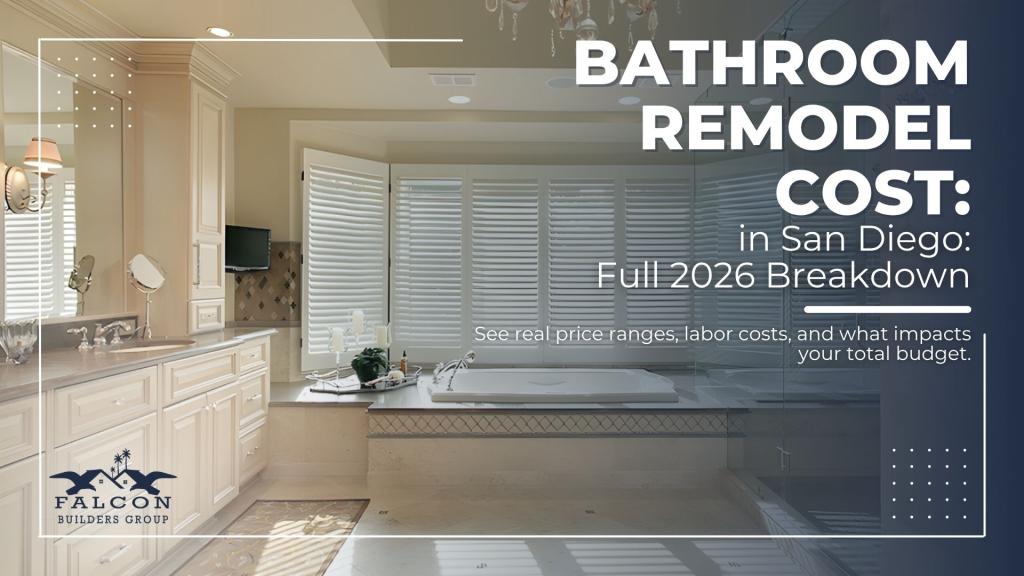
Bathroom remodel cost guide in San Diego featuring a luxury bathroom with custom cabinets and soaking tub

Bathroom Remodel Cost in San Diego: Full 2026 Breakdown

You walk into your bathroom every day and notice the same problems. The shower feels cramped. Your small vanity has little storage. The old tile makes the room feel dark and outdated. Then one question starts coming up again and again: “What is the real bathroom remodel cost in San Diego right now?” Many homeowners start looking at design ideas before thinking about budget. Then the numbers start adding up. Labor, permits, plumbing, tile, and hidden repairs can change the total price fast if the project is not planned the right way. That is why understanding bathroom remodel cost before construction starts can save homeowners stress, delays, and expensive surprises later. Whether you own a coastal condo near Pacific Beach or a family home in Rancho Bernardo, knowing what affects pricing helps you make smarter remodeling decisions from the start. Quick Summary: Bathroom Remodel Cost in San Diego As expected, the actual remodel cost still depends on the size of the bathroom, material selections, labor, plumbing changes, and the condition of the home. In most cases, cosmetic updates start around $12,000, while larger custom remodels may exceed $40,000. Thus, planning early helps homeowners avoid budget problems and make better long-term choices. Why Bathroom Remodel Cost Changes From Home to Home Many homeowners ask why remodeling prices vary so much between projects. The answer usually comes down to the condition of the space and the type of upgrades involved. For example, a newer condo near Downtown San Diego may only need cosmetic improvements. Meanwhile, an older home in North Park or Point Loma may need plumbing upgrades, ventilation corrections, or structural repairs behind the walls. Before setting a remodeling budget, homeowners should understand the biggest factors that affect the cost: Bathroom size Plumbing changes Finish quality Electrical work Permit fees Labor requirements Structural or water damage repairs As mentioned earlier, smaller cosmetic updates often stay within a lower budget range. On the other hand, custom layouts and luxury materials typically increase both labor time and overall project cost. Because of this, early planning plays a major role in controlling expenses. Bathroom Remodel Cost by Project Type Not every remodel requires a full demolition. While some homeowners want a fresh new look, others need major layout changes to improve daily function. Understanding the different remodeling levels helps homeowners set more realistic expectations before construction begins. Cosmetic Bathroom Remodel A cosmetic remodel focuses on surface-level improvements without changing the layout. These projects often include: New paint Updated fixtures Vanity replacement New lighting Minor tile upgrades Estimated Cost: $12,000–$18,000 This option works well for homeowners preparing to sell or updating older finishes without major structural work. Once cosmetic improvements no longer solve the problem, homeowners often move into mid-range remodeling projects. Mid-Range Bathroom Remodel Mid-range remodels improve both appearance and function. This is one of the most common bathroom remodeling San Diego projects homeowners request today. These remodels may include: Shower replacement New flooring Updated cabinetry Improved lighting Better storage solutions Estimated Cost: $20,000–$35,000 Homeowners in neighborhoods like Clairemont and Mission Valley often choose this remodeling level because it balances comfort, appearance, and long-term value. Larger luxury remodels usually involve more customization and higher-end materials. Luxury Bathroom Remodel Another type is luxury remodels, which focus on premium finishes, spa-like comfort, and custom design work. These projects may include: Walk-in showers Heated flooring Custom tile patterns Frameless glass Freestanding tubs Smart mirrors Designer fixtures Estimated Cost: $40,000+ Homes in La Jolla, Del Mar, and Rancho Santa Fe often include luxury bathroom upgrades designed for long-term comfort and resale appeal. Now that homeowners understand the different project levels, it helps to see where most of the budget actually goes. Bathroom Remodel Cost Breakdown by Category Many people think materials take the largest portion of the budget. In reality, labor often becomes the biggest expense during bathroom renovation projects. Here is a simplified cost breakdown homeowners can expect: Remodeling Element Average Cost Range Demolition $1,000–$3,000 Plumbing $2,000–$8,000 Electrical $1,500–$5,000 Tile Installation $3,000–$10,000 Vanity & Cabinets $2,000–$8,000 Shower or Tub $3,000–$12,000 Permits $500–$2,500 Labor 40%–60% of the total budget Labor costs often increase when projects involve plumbing relocation, custom tile work, or structural repairs. That leads homeowners to another important question: what hidden issues increase bathroom remodel cost? Hidden Problems That Increase Bathroom Remodel Cost Some of the biggest remodeling expenses stay hidden until demolition begins. This situation happens often in older San Diego homes. Have you ever removed old tile and discovered moisture damage underneath? Many homeowners do not realize problems exist until walls are opened. Common hidden repairs include: Water damage Mold growth Outdated plumbing Improper wiring Weak subflooring Ventilation issues Homes near coastal areas like Ocean Beach and Pacific Beach often experience long-term moisture exposure because of salt air and humidity. That is why experienced general contractors San Diego homeowners trust usually recommend setting aside an extra 10–15% emergency budget for unexpected repairs. Indeed, planning for hidden issues early helps reduce stress once construction begins. How Material Choices Affect Bathroom Remodel Cost Material selection changes pricing faster than most homeowners expect. Two bathrooms can have the same layout and still have very different budgets based on finish selections alone. Budget-Friendly Materials Porcelain tile Laminate countertops Prefabricated vanities Acrylic shower systems Premium Materials Quartz countertops Natural stone tile Frameless shower glass Custom cabinetry Designer plumbing fixtures Custom tile patterns and luxury fixtures often require additional labor hours, which increases the total bathroom remodel cost. Many homeowners in home remodeling San Diego projects focus on durable materials first instead of chasing short-term design trends. Long-lasting finishes usually create better value over time. If you are still early in the remodeling process, read our previous guide: “Bathroom Remodel Planning: How San Diego Homeowners Should Start.” Is a Bathroom Remodel Worth It in San Diego? Many homeowners wonder if remodeling is worth the investment. In many situations, the answer is yes. The truth is, an updated bathroom improves: Daily comfort Storage space Lighting quality Home functionality Property appeal In competitive

Bathroom Remodel Cost in San Diego: Full 2026 Breakdown Read More »

Modern bathroom remodel planning ideas for San Diego homeowners with a freestanding tub and custom vanity

Bathroom Remodel Planning: How San Diego Homeowners Should Start

You stand in your bathroom every morning and think, “This space could be so much better.” The tile feels outdated. The layout wastes space. The lighting makes everything look dull. Still, jumping straight into demolition without proper bathroom remodel planning can lead to delays, surprise costs, and stress you did not expect. In San Diego, where homes range from historic craftsman properties in North Park to coastal condos in La Jolla, no two bathrooms are the same. That is why bathroom remodel planning is the most important step before picking finishes or calling a contractor. If you start with clarity, the rest of the project becomes easier, smoother, and more rewarding. Quick Summary: Bathroom Remodel Planning in San Diego Bathroom remodel planning starts with defining your goals, budget, and layout before choosing materials. Then, you confirm permits, timelines, and contractor scope. As a result, you avoid costly changes and delays once construction begins. Why Bathroom Remodel Planning Matters in San Diego Before discussing layouts and tile, it helps to understand why bathroom remodel planning matters so much in San Diego. Our homes face coastal moisture, older plumbing systems, and strict local codes. A simple design idea may require structural review or updated permits. For example, homes near Mission Hills or older properties in Point Loma often need plumbing upgrades. Meanwhile, newer developments in Carmel Valley may have HOA guidelines that affect design choices. Bathroom remodel planning protects you from surprises. It also helps you balance style, comfort, and long-term value. Once you understand the importance, the next step is defining your goals clearly. Step 1: Define Your Goals During Bathroom Remodel Planning Every remodel should solve a problem. Without clear goals, projects drift and budgets expand. Ask yourself: Is this remodel about function, style, or resale value? Do you need more storage? Is accessibility a concern? For example, families in Rancho Bernardo often want dual sinks for busy mornings. Meanwhile, downtown San Diego condo owners may focus on maximizing small spaces. When bathroom remodel planning starts with honest goals, design decisions become easier. Once your vision is clear, you can move on to budgeting. Step 2: Set a Realistic Budget Before Designing Budget comes before materials. Always. In San Diego, bathroom remodeling costs vary based on size, finishes, and structural changes. While next week’s guide will break down pricing in detail, early bathroom remodel planning should include a realistic budget range. Here are common starting points: Cosmetic updates: $12,000–$18,000 Mid-range remodel: $20,000–$35,000 High-end renovation: $40,000+ Labor costs in San Diego reflect local standards and building codes. In addition, permit requirements may apply depending on plumbing and electrical work. When you know your spending range, you avoid falling in love with materials outside your budget. Now that you have numbers in mind, layout becomes the next priority. Step 3: Review Layout and Function Layout changes increase cost but often improve daily life. During bathroom remodel planning, consider whether moving plumbing is necessary. Keeping the toilet and shower in place saves money. However, adjusting the layout may improve the flow. For example, older homes near Balboa Park often have tight layouts. Opening the space or installing a walk-in shower can improve comfort. Ask yourself: Does the current layout work, or does it frustrate you daily? Once layout decisions are made, material selection becomes more strategic. Step 4: Choose Materials That Fit San Diego’s Climate San Diego’s coastal air and humidity influence material choice. Bathroom remodel planning should include moisture-resistant finishes and proper ventilation. Porcelain tile performs well in humid environments. Quartz countertops resist staining. High-quality grout reduces long-term maintenance. Homes near the coast, especially in Pacific Beach, benefit from corrosion-resistant fixtures. Choosing the right materials early prevents replacement later. Now that design elements are clear, you must think about permits and the timeline. Step 5: Understand Permits and Timeline Bathroom remodel planning in San Diego may require permits for plumbing, electrical, or structural changes. The City of San Diego enforces codes to protect safety and property value. Timeline typically includes: Design phase: 2–4 weeks Permits: 1–3 weeks Construction: 4–8 weeks Planning ahead avoids project delays. In addition, scheduling around holidays or peak renovation seasons can affect start dates. With timing clarified, contractor selection becomes the final major decision. Step 6: Choose the Right Local Contractor Bathroom remodel planning should always include researching licensed professionals. Look for: Valid California contractor license Insurance coverage Clear scope of work Written timeline Falcon Builders Group handles bathroom remodeling San Diego homeowners trust because we combine planning, design, and execution under one roof. Thus, working with a local expert in home remodeling San Diego projects ensures your bathroom renovation San Diego property needs to comply with building standards and local trends. Once your contractor is selected, you move into pre-construction preparation. Bathroom Remodel Planning Overview Smart bathroom remodel planning means looking beyond finishes and focusing on the bigger picture. Problems like poor layout, outdated fixtures, or hidden moisture damage can affect both cost and construction time. The overview below helps simplify what homeowners should expect before starting their remodel journey. Problem Cause Solution Estimated Cost Timeline Outdated style Old fixtures Cosmetic remodel $12K–$18K 4–6 weeks Poor layout Inefficient space Layout redesign $25K–$40K 6–8 weeks Moisture damage Ventilation issues Structural repair $20K+ 6–10 weeks Limited storage Small cabinetry Custom storage $18K–$30K 5–7 weeks This table shows why planning early prevents budget overruns. Next, let’s simplify the process more visually. Bathroom Remodel Planning Checklist The best bathroom remodels start long before demolition day. Here’s a fast and easy visual guide to help you plan with confidence. Before You Start: Define goals Set budget range Review layout Confirm materials Check permit needs Timeline Snapshot: Design: 2–4 weeks Permits: up to 3 weeks Construction: 4–8 weeks Smart Planning Tip: Add a 10–15% buffer for unexpected adjustments. With preparation complete, many homeowners still have questions. Let’s answer the most common ones. Frequently Asked Questions Still unsure about what to expect during the planning stage? These frequently asked questions can help you

Bathroom Remodel Planning: How San Diego Homeowners Should Start Read More »

Kitchen layout mistakes example featuring an inefficient kitchen layout with narrow walkways and crowded island spacing

Kitchen Layout Mistakes: Why Your Space Feels Off (And How to Fix It)

Many homeowners live with daily frustration without knowing the real cause. The issue is often kitchen layout mistakes, not the age of the cabinets or the wall color. If your kitchen feels crowded, awkward, or tiring to use, the layout may be working against you. In San Diego, homes range from compact condos in Mission Valley to classic homes in North Park and open-plan houses in Carmel Valley. Each one needs a smart plan. The good news is that many layout problems can be fixed with the right remodel strategy. Why Kitchen Layout Mistakes Make a Good Kitchen Feel Bad A kitchen can look beautiful and still feel wrong. That happens when design choices ignore movement, storage, and work zones. Many kitchen layout problems are hidden until you use the space every day. Do you bump into someone while cooking, or does the dishwasher block a walkway? Are counters always full because storage is weak? These are common signs of layout trouble. Good kitchens support daily life. On the other hand, poor layouts create stress in small moments. Once you know the warning signs, fixes become much easier. First, let’s look at the most common issues homeowners face. Common Kitchen Layout Mistakes That Hurt Flow While some problems show up right away, others build slowly over time. These kitchen layout mistakes to avoid can affect comfort and function. Poor Work Triangle The sink, stove, and fridge should feel connected. If these three sit too far apart or too close together, cooking feels harder. Tight Walkways Walkways that are too narrow make movement stressful, especially when more than one person uses the kitchen. Bad Appliance Placement A fridge door that blocks traffic or an oven near a walkway creates daily frustration. Weak Counter Space Not enough prep space near the sink or stove slows cooking and creates clutter. These issues are common in both old and new homes. The next step is understanding why they happen. Kitchen Layout Mistakes in San Diego Homes Local homes often come with unique floor plans. That is why many kitchen layout issues are tied to the original structure. For example, older homes in Kensington or South Park may have closed kitchens with limited wall space. Some beach homes in Pacific Beach were built for smaller appliances and simpler storage needs. Newer homes in Eastlake may have open layouts, yet oversized islands can still hurt flow. Many remodels also inherit old decisions. Suppose a past owner has added cabinets without improving movement. That creates a kitchen that looks newer but still feels awkward. Every home tells a story. A smart remodel reads that story before making changes. Next, let’s talk about signs your layout needs help. Signs Kitchen Layout Mistakes Are Affecting Your Daily Life Some homeowners adapt to bad layouts for years. However, frustration often shows up in habits. These clues may point to kitchen layout mistakes. You avoid cooking at home Counters stay cluttered all week Cabinet doors hit each other Two people cannot move comfortably You walk too much while cooking Trash pullout sits far from prep space The island feels more like an obstacle than a feature Do any of these sound familiar? If yes, the issue may be layout, not storage alone. Once pain points are clear, the right fix becomes easier to plan. How to Fix Kitchen Layout Oversights with Better Design The best remodels solve problems first and choose finishes second. That approach helps remove kitchen layout mistakes for good. Improve Work Zones Keep prep, cooking, and cleanup areas connected. This layout creates smoother movement. Widen Walkways Aim for comfortable clearance around islands and appliance doors. Add Smart Storage Use drawers, pullouts, and pantry towers where they help most. Move Appliances with Purpose Relocating the fridge or dishwasher can change the whole feel of the room. Choose the Right Island Size A smaller island with better spacing often works better than a large island. Thus, a strong kitchen layout design focuses on daily use, not trends alone. Next, let’s look at layout types that work well in real homes. Kitchen Layout Mistakes and the Best Kitchen Floor Plans Not every layout fits every home. The right kitchen floor plans depend on room size and traffic flow. L-Shaped Kitchens Great for open homes and corner spaces. They allow flexible movement and room for an island. Galley Kitchens Perfect for smaller homes and condos. They can work very well when walkways stay clear. U-Shaped Kitchens Excellent for storage and work zones. They need enough room to avoid a cramped feel. One-Wall Kitchens Common in condos and ADUs. Smart vertical storage becomes important here. In San Diego, many condos near downtown use one-wall or galley layouts, while suburban homes often suit L-shaped plans. Matching layout to space is key. Kitchen Layout Mistakes, Permits, and Remodel Planning Sometimes, layout changes need more than design ideas. For instance, moving plumbing, gas lines, walls, or electrical systems may require permits in San Diego. All of these matter when fixing a major kitchen layout and design. The City of San Diego often requires permits for structural, plumbing, and electrical updates during kitchen remodels. Working with a licensed contractor helps protect safety, scheduling, and resale value. It also helps to plan the budget early. If you are comparing scope and pricing, review the cost of a kitchen remodel in San Diego before final decisions. Remember: A good plan saves time, money, and stress. That leads to the final question: should you remodel now? When a Custom Kitchen Makes Sense Some kitchens need more than small changes. If the room fights you every day, a custom kitchen may be the best long-term answer. Custom layouts help when: Walls create dead space Standard cabinets waste corners Your family needs more seating You cook often and need better zones You want a stronger resale value For many homeowners, layout fixes bring the biggest return because they improve daily life immediately. FAQs About Kitchen Layout Remodeling in San Diego Still

Kitchen Layout Mistakes: Why Your Space Feels Off (And How to Fix It) Read More »

Kitchen cabinet types in San Diego featuring a modern kitchen with blue cabinetry, built-in oven, and organized storage options

Kitchen Cabinet Types: Which One Actually Fits Your San Diego Home?

Choosing the right kitchen cabinet types can shape the look, comfort, and value of your home. Cabinets take up a large part of the kitchen, so they affect the style and storage every day. In San Diego, homes range from beach condos in Pacific Beach to classic houses in North Park and large family homes in Carmel Valley. Each layout needs a smart plan. What works in one home may feel wrong in another. If you are planning a remodel, this guide will help you compare the best options for your space, budget, and goals. Why Kitchen Cabinet Types Matter in San Diego Homes The best remodels start with function, not color. While many homeowners choose paint first, the cabinet structure matters just as much. In fact, the right kitchen cabinet types improve storage, daily use, and long-term value. San Diego homes often have unique floor plans. For instance, older homes in Kensington may have narrow kitchens with less wall space. Meanwhile, newer homes in Del Sur often have open layouts with room for islands and tall storage. That is why cabinet choice should match your home and your routine. Do you cook most nights? Deep drawers and pantry space may matter most. If you host family and friends, clean lines and stylish finishes may move to the top of the list. At this point, let’s compare the main cabinet categories. Kitchen Cabinet Types by Build: Stock, Semi-Custom, and Custom Before you choose color or hardware, choose how the cabinets are made. These kitchen cabinet types affect cost, fit, and timeline. Stock Cabinets Stock cabinets come in set sizes and limited finishes. They are also a budget-friendly choice with fast delivery. They work well for rentals, resale updates, or kitchens with simple layouts. If your space uses standard sizes, stock cabinets can offer solid value. Semi-Custom Cabinets Semi-custom cabinets give you more sizes, finishes, and storage features. Hence, you get a better fit with a mid-range price. Many San Diego homeowners choose this option because it balances value and design freedom. Custom Cabinets Custom cabinets are built for your exact kitchen. They fit odd corners, older homes, and high-end remodels. Homes in La Jolla and Point Loma often benefit from custom work because many layouts need made-to-fit storage. Now let’s look at the styles people notice first. Kitchen Cabinet Types by Door Style The cabinet door sets the tone of the room. These kitchen cabinet types and designs help define the overall style of your kitchen. Shaker Cabinets Shaker doors have a clean frame and simple lines. They fit coastal, farmhouse, transitional, and modern homes. Many designers see them as the best type of kitchen cabinets for resale because buyers know and trust the style. Flat-Panel Cabinets Flat-panel doors have a smooth face and a modern look. They also pair well with sleek hardware and open spaces. These are common in downtown San Diego condos and newer homes with clean design lines. Raised-Panel Cabinets Raised-panel doors bring depth and detail. They fit traditional homes and larger kitchens with classic features. Once the style feels clear, the next step is matching cabinets to the size of your kitchen. Best Kitchen Cabinet Types for Small and Large Kitchens The smartest remodels choose kitchen cabinet types based on layout. Thus, a beautiful cabinet that wastes space is never the right choice. Small Kitchens For homes in Mission Valley, Hillcrest, or Normal Heights, try these ideas: Full-height upper cabinets Light colors that brighten the room Wide drawers instead of lower shelves Glass doors in a few spots for an open feel Pull-out pantry storage Large Kitchens For homes in Rancho Bernardo or Scripps Ranch, consider: Large islands with storage on both sides Double pantry walls Mixed cabinet colors for contrast Appliance garages Tall feature cabinets around the fridge area Remember: Small kitchens need smart storage. On the other hand, large kitchens need balance and flow. Next, let’s talk about materials that hold up over time. Kitchen Cabinet Types by Material and Strength Cabinets face heat, steam, spills, and daily use. That is why material matters. When comparing different types of cabinets for kitchen spaces, focus on strength and life span. Solid Wood Solid wood offers natural beauty and long life. It can be repaired and refinished. Plywood Cabinet Boxes Many contractors prefer plywood because it is strong and moisture-resistant. It is a smart choice for busy family kitchens. MDF Doors MDF creates a smooth painted finish. It works well for modern painted styles. Particleboard Particleboard costs less, though it has a shorter life span. It may suit short-term updates or tight budgets. Homes near Ocean Beach, Mission Beach, and Coronado often deal with salty air and moisture. Quality finishes and strong materials can help cabinets last longer. Now let’s improve daily function. Kitchen Cabinet Types and Sizes That Improve Storage Good cabinets should solve problems. The right kitchen cabinet types and sizes make cooking easier and reduce clutter. Think about these upgrades: Deep drawers for pots and pans Pull-out trash near prep areas Spice pull-outs beside the range Ceiling-height cabinets for seasonal items Corner pull-outs instead of dead space Narrow tray storage near the oven Pantry towers for snacks and dry goods What slows you down now? Crowded counters? Lost lids? No pantry room? Your next kitchen should fix those pain points. That leads to planning, permits, and project timing. Kitchen Cabinet Types and Kitchen Remodeling in San Diego Some cabinet swaps are simple. A bigger remodel may need permits if you move plumbing, electrical lines, walls, or ventilation. Many homeowners combine cabinet upgrades with a full kitchen remodeling project in San Diego to save time and labor costs. A licensed contractor can help with layout planning, scheduling, code rules, and installation order. This expertise matters when you also replace floors, counters, lighting, or appliances. San Diego homeowners often remodel to create open kitchens, better storage, and stronger resale value. A smart plan helps avoid delays and surprise costs. Which Kitchen Cabinet Types

Kitchen Cabinet Types: Which One Actually Fits Your San Diego Home? Read More »

https://drive.google.com/file/d/1VbfcgI9eXgGqx3dnOsK9jhgqiOhqExIK/view?usp=drive_link

Kitchen Remodel Cost in San Diego: What You’ll Really Pay in 2026

A kitchen remodel is exciting—until the numbers start coming in. One contractor says $28,000. Another says $65,000. Then you hear a neighbor spent over $90,000 in Del Mar, while someone in Mission Valley says they updated theirs for much less. So, what is the real kitchen remodel cost in San Diego in 2026? Still, the honest answer is this: it depends on the size of your kitchen, the finishes you choose, and how much work happens behind the walls. This guide breaks it down in plain English so you can plan smart, avoid overspending, and know when it is time to call a professional. Why Kitchen Remodel Costs Vary So Much in San Diego Many homeowners think kitchens are priced by cabinets and countertops alone. In reality, every remodel has layers of cost. For instance, a condo kitchen near Downtown San Diego may need HOA approvals, limited work hours, and elevator access. At the same time, a coastal home in La Jolla may need moisture-resistant materials. Meanwhile, an older home in North Park may need electrical updates before new appliances can go in. That is why two kitchens that look similar can have very different budgets. Once you understand what drives cost, pricing starts to make sense. Let’s look at the real numbers homeowners are seeing in 2026. Average Kitchen Remodel Cost in San Diego (2026) If you want a realistic starting point, most San Diego kitchen projects fall into three ranges. Basic Kitchen Remodel: $20,000 to $35,000 This level works well for homeowners who want a fresh look without changing the layout. It often includes: Stock cabinets New countertops Sink and faucet replacement Paint New lighting fixtures Standard appliance swaps This is common in condos, rental properties, or smaller homes in areas like Clairemont and Serra Mesa. If your kitchen layout already works, this range can stretch far. However, once walls move or plumbing changes, costs rise fast. Mid-Range Kitchen Remodel: $35,000 to $60,000 This is where many family homes land. It may include: Semi-custom cabinets Quartz countertops Tile backsplash New flooring Upgraded lighting Minor layout changes Better storage solutions This level is common in neighborhoods like Carmel Valley, Poway, and Rancho Peñasquitos. For many homeowners, this range offers the best mix of value and design. Thus, it improves daily life without pushing into luxury pricing. High-End Kitchen Remodel: $60,000 to $100,000+ This level focuses on premium finishes and major changes. It may include: Custom cabinets Luxury appliances Structural changes Large islands Designer lighting Smart home features High-end stone surfaces You often see this in homes near Coronado, Del Mar, and coastal properties with ocean views. Luxury kitchens can be stunning, but they require strong planning and a skilled builder. That leads us to what impacts the price the most. What Impacts Your Final Kitchen Remodel Price? The final kitchen remodel price still depends on the choices you make early in the process. 1. Layout Changes Moving a sink, gas line, or wall adds labor and permit work. Thus, keeping the same layout is often the fastest way to control costs. 2. Cabinet Selection As expected, cabinets usually take a large share of the budget. Stock cabinets cost less than custom-built options. 3. Material Choices Quartz, granite, tile, hardware, flooring, and fixtures all affect your total. 4. Age of the Home Older San Diego homes may need plumbing, electrical, or framing updates to meet code. 5. Permit Requirements The City of San Diego may require permits for electrical, plumbing, and structural work. This protects your home, but it adds time and cost. While many homeowners focus only on finishes, hidden items behind the walls often change budgets more than countertop colors ever will. Kitchen Remodel Cost Per Square Foot: Is It Useful? Some homeowners ask about the kitchen remodel cost per square foot. It can help, but only as a rough guide. In San Diego, many remodels fall between $150 and $350+ per square foot, depending on finishes and scope. Still, kitchens are not like flooring projects. A small kitchen with custom cabinets can cost more than a large kitchen with basic materials. Hence, use square foot pricing as a reference, not a final answer. A real on-site estimate is always more accurate. Typical Installation Costs and What They Cover Indeed, labor is a major part of any remodel. Skilled trades are worth the investment because kitchens involve plumbing, electrical, carpentry, and finish work. Typical installation costs may include: Demolition and debris removal Cabinet installation Countertop templating and install Plumbing hookups Electrical upgrades Appliance installation Flooring installation Painting and trim work That is where a professional team helps most. Professional installation protects your materials and prevents expensive future repairs. Now that you know what labor covers, let’s talk about avoiding waste. How Homeowners Overspend on Kitchen Renovation Costs Overall, overspending usually does not happen from one big mistake. It happens through many small decisions. Common examples include: Changing Plans Mid-Project Moving outlets or redesigning the island after work starts can create delays and extra charges. Buying Cheap Materials Twice Low-cost fixtures often wear out sooner and need replacement. Hiring the Cheapest Bid A low bid may leave out permits, cleanup, or proper workmanship. Ignoring Storage Needs Pretty kitchens that lack storage often disappoint after move-in. Smart planning keeps kitchen renovation costs under control. It also creates a better final result. When Should You Call a Professional Contractor? Of course, some cosmetic updates are DIY-friendly. Painting walls or replacing hardware can be manageable. However, you should call a licensed kitchen renovation contractor in San Diego when the project involves: Plumbing changes Electrical work Cabinet installation Structural changes Flooring throughout the kitchen Permit coordination Full project management If you live in older areas like South Park or Normal Heights, hidden issues are common once demolition begins. That is where Falcon Builders Group adds value. An experienced builder helps solve problems before they become expensive surprises. Questions Homeowners Ask Before Remodeling Planning feels easier when you have answers, so here are the

Kitchen Remodel Cost in San Diego: What You’ll Really Pay in 2026 Read More »

Kitchen remodel planning in San Diego, CA featuring a modern kitchen with a large island, wicker bar stools, pendant lights, and custom cabinets.

How to Plan a Kitchen Remodel in San Diego Without Costly Mistakes

A kitchen remodel can be one of the most exciting home projects. Picture a space that fits your lifestyle perfectly—better storage, more counter space, and a fresh, modern look. But before you start tearing down walls and picking out appliances, there’s a crucial first step involved—kitchen remodel planning. Without a clear and thoughtful plan, even the simplest remodel can quickly spiral into a costly, stressful mess. In San Diego, where homes come in all styles, from cozy bungalows in North Park to luxurious estates in La Jolla, kitchen remodels can be particularly tricky. This guide will help you plan your kitchen remodel with confidence, ensuring that you stay on track, avoid common mistakes, and create a space that is functional, stylish, and worth the investment. Why Kitchen Remodel Planning Matters in San Diego San Diego is home to diverse kitchens, and each neighborhood offers its own set of challenges and opportunities when it comes to remodels. From historic homes in Old Town to modern condos in Downtown, it’s crucial to consider both your personal needs and the unique conditions of your home.  For example, if you live by the coast in Pacific Beach or Coronado, you’ll need to choose materials that can handle the salty air and humidity. In addition, San Diego’s building codes might require special permits, especially if you’re planning to make structural changes or move plumbing around. That’s why kitchen remodel planning is essential. It helps you avoid budget overruns, delays, and design regrets. By thinking things through, you can create a kitchen that’s functional, beautiful, and built to last. Step 1: Define Your Kitchen Remodel Goals When Planning Before you start picking out cabinets or countertops, take a moment to think about what you really want. Do you need more space for family meals? Are you looking for an updated, modern kitchen to match your home’s style? Or is your focus on adding value for a future sale? Knowing your goals upfront will guide every decision you make, from layout to materials. Without clear objectives, it’s easy to get distracted by design trends that aren’t a good fit for your home. Whether you’re dreaming of a high-end kitchen in a La Jolla mansion or a budget-friendly upgrade in a Mission Valley condo, your goals will help you stay on track and make smarter choices. Step 2: Set a Realistic Kitchen Remodel Budget One of the most important parts of kitchen remodel planning is setting a budget. Without a clear idea of how much you’re willing to spend, you might find yourself overspending, especially if you fall in love with pricey finishes or custom designs. Kitchen remodels in San Diego can range from $20,000 to $75,000 or more, depending on the scope of the project. Here’s a simple budget breakdown to help you get started: As you create your budget, don’t forget to add a little extra to cover unexpected costs like plumbing issues or design changes. You’ll also want to consider financing options, especially if you are taking on a large-scale remodel. Step 3: Redesign Your Kitchen Layout for Maximum Efficiency When it comes to kitchen remodel planning, the layout should always come before the finishes. Many homeowners get excited about picking out new cabinets and countertops. But in reality, the layout is what truly makes or breaks a kitchen remodel. You want a space that works well for your lifestyle and daily routine. Start by thinking about how you move around in your kitchen. Do you entertain often? If so, an open layout that connects your kitchen with your living or dining room might be a good fit. If you cook at home most nights, focus on improving the work triangle—the flow between the sink, stove, and refrigerator. For example, in San Diego, where the weather is often sunny and mild, homeowners in areas like La Jolla and Ocean Beach are increasingly choosing open kitchens that flow into outdoor spaces. This trend not only improves functionality but also adds value to your home. Step 4: Choose Materials and Finishes That Fit Your Budget and Style After you’ve nailed down the layout, it’s time to pick materials. This is where many homeowners make costly mistakes by choosing the wrong materials for their needs. In San Diego, where the weather and humidity can vary, it’s essential to choose materials that are both stylish and durable. If you live in coastal neighborhoods like Pacific Beach, look for finishes that can withstand the salty air. Quartz countertops, for example, are a durable and low-maintenance choice. Meanwhile, if you live in inland areas like Rancho Santa Fe, you might want to opt for natural wood or granite. Think about the long-term upkeep of your materials as well. If you choose a high-maintenance option, make sure it fits within your lifestyle. Whether you’re investing in luxury materials or opting for more affordable alternatives, be sure to consider your kitchen’s overall function and durability. Step 5: Hire the Right Kitchen Contractor When Planning a Remodel Now comes one of the most important steps in kitchen remodel planning: hiring the right contractor. The right professional will help you avoid common mistakes, stick to your budget, and ensure that everything is done to code. When choosing a kitchen remodel contractor in San Diego, look for someone with experience and knowledge of local building codes. San Diego has strict regulations for home remodels, especially if you live in historic areas like Old Town or Mission Hills. You’ll want a contractor who is familiar with these rules and can help you navigate the permit process smoothly. To ensure your remodel goes smoothly, don’t miss our full guide on home remodeling permits in San Diego. A good contractor will also have a strong network of suppliers, which can help you get the best materials at a reasonable price. Most importantly, they will keep your project on track and deliver the results you’re looking for. Planning a Kitchen Remodel? Consider Costs in San Diego Before we dive

How to Plan a Kitchen Remodel in San Diego Without Costly Mistakes Read More »

A guide to retaining wall design for hillside homes in San Diego

Retaining Wall Design for Sloped Properties in San Diego

If you live on a hillside in San Diego, you know how fast your yard can change during a winter storm. With one heavy rainfall, the soil starts to shift, wash out, or feel unsafe. That is where smart retaining wall design steps in before the damage grows. A well-built wall doesn’t just hold the ground in place. It also protects your home, shapes your outdoor space, and gives you a chance to enjoy the view you fell in love with. In this guide, we’ll look at how retaining walls support sloped properties, the design options available, and how Falcon Builders Group helps homeowners turn steep, unused slopes into safe and welcoming spaces. Why Retaining Wall Design Matters on San Diego Slopes Hillside homes in La Jolla, Scripps Ranch, and Point Loma offer beautiful views, but the slopes behind them can bring real stress. When a wall is not designed well, it can crack, lean, block drainage, or even put nearby structures at risk. Thus, a strong retaining wall design starts with understanding your soil, the angle of the slope, and the way water moves across your property. A well-built wall holds the ground in place, manages water in a safe way, and creates level space you can use. That might mean a patio, a small lawn, or a safe walkway around the home. At Falcon Builders Group, we plan your wall around how you hope to use the space years from now, not just the immediate repair. Local Conditions That Shape Retaining Wall Design in San Diego Building a retaining wall in San Diego brings challenges you won’t find in flat or rainy regions. Our soil, weather, and coastal air play a big part in how long a wall will last. Here’s what every homeowner should know: Soil that shifts between clay and sand, especially after long dry months Short seasons of heavy rain that put sudden pressure on hillside walls Coastal air in places like Pacific Beach and Ocean Beach that adds moisture and salt Local building codes that require engineering for taller walls or walls near property lines Because of these conditions, your wall must be more than a simple structure. Hence, it needs a retaining wall design that works with your entire property. At Falcon Builders Group, we study your drainage, slope, soil, and nearby structures before we suggest any layout. This approach also gives you a wall that looks clean and stays strong for years. With the groundwork set, let us take a closer look at the retaining wall styles that work best for hillside homes. Retaining Walls for Sloped Yards: Designs That Work for San Diego Homes San Diego’s hills create spaces full of potential, yet they also demand smart structural choices. Each retaining wall design has its own strengths, and choosing the right one can turn a steep backyard into a space you feel safe using. These are the styles that fit both the slope and the look of your San Diego property: Gravity Retaining Walls Built from block, stone, or concrete, gravity walls use weight to secure the slope. They suit shorter rises and bring a strong, classic look. Cantilever Retaining Walls Cantilever walls use reinforced concrete and a hidden base that sits under the soil. They support taller slopes and tight areas where stability matters most. Segmental Retaining Walls Segmental walls lock into place with special block systems. That is why homeowners often choose them for their modern look and flexible layout. Water Retaining Walls In yards with pools, ponds, or heavy runoff, a water retaining wall offers added support. It manages soil and water in one structure and protects nearby surfaces at the same time. Terraced Retaining Walls Terraced designs stack multiple low walls at different levels. They break up a steep slope, opening room for gardens, walkways, or small seating areas. Once you know which retaining wall design fits your needs, the next step is creating the right drainage plan. This measure protects your wall and your home through San Diego’s wettest months. How to Prevent Erosion on a Sloped Property with Smart Design When heavy rain hits San Diego, muddy water can rush across a hillside yard fast. That movement puts real pressure on any retaining wall. Strong erosion control keeps your slope stable and protects the investment you make in your outdoor space. Here are the key steps we use to control water before it causes damage: Gravel backfill that lets water move through the soil instead of pushing against the wall Perforated drain pipes that guide water away from the slope with steady control Outlets placed in safe locations to release water without flooding your yard Site drainage systems tied into the street or an approved runoff area on steep lots Surface-water planning that manages roof runoff, patio slopes, and overflow paths Groundcover plants, mulch, and stone channels that slow water on long slopes in areas like Rancho Bernardo and Tierrasanta Once the water moves in the right direction, your wall can then do its job without stress. This opens the door to a yard that feels safe, stable, and ready for real use. Now that you can see a clear plan for your space, the next big question is which material will look good and last. Materials and Styles for Retaining Wall Design in Hillside Homes Homeowners often ask, “What’s the best material for my wall?” The answer depends on your style, budget, and how visible the wall will be. Regardless, your final choice should match both your home’s design and the strength your hillside needs. Common options include: Modern segmental block systems with clean edges and soft-toned finishes Stone veneer over concrete for a natural, canyon-inspired feel Textured blocks that add depth on steep, rugged slopes Smooth or stained concrete for a crisp, updated look around patios and yards Decorative finishes that help the wall blend with nearby landscaping No matter which material you choose, craftsmanship is what keeps the wall strong through

Retaining Wall Design for Sloped Properties in San Diego Read More »

Luxury beachfront home showcasing house renovation in San Diego, CA

Best Time of Year for House Renovation San Diego

If you are planning a house renovation San Diego that you’ll love, timing is everything. The city’s unique climate, bustling construction scene, and local regulations all play a role in determining when your project will run most smoothly. Whether you’re dreaming of a kitchen upgrade, a bathroom remodel, or a full home transformation, understanding the best time of year for house renovation in San Diego can save you money, reduce stress, and deliver better results. In this guide, we will explore the seasonal factors that affect home remodeling San Diego projects, the pros and cons of renovating in each season, and expert tips from leading home remodeling contractors San Diego trusts. By the end, you will know exactly when to start your project—and who to call to make it a success. Why Timing Matters for House Renovation in San Diego San Diego’s mild, Mediterranean climate makes it a popular place for year-round home improvement. However, not all months are created equal when it comes to construction. Weather, contractor availability, material costs, and even permit processing times can fluctuate throughout the year. Choosing the right season for your house renovation San Diego project can mean: Faster project completion Lower labor and material costs Fewer weather-related delays Easier scheduling with your general contractor San Diego CA Less disruption to your daily life Let’s break down what each season offers for your home improvement San Diego journey. Spring: The Kickoff Season for Home Remodeling in San Diego Is spring the best time to start a house renovation in San Diego? Spring is often the unofficial start of the remodeling season. As the weather warms up and the days get longer, homeowners feel inspired to tackle long-awaited projects. For house renovation in San Diego, spring offers several advantages: Mild Temperatures: Ideal for both indoor and outdoor work. Longer Days: More daylight means crews can work longer hours. Contractor Availability: Many home remodeling contractors in San Diego recommend booking early, as their schedules fill up quickly after winter. Potential Downsides: Spring is a popular time for renovations, so you may face higher demand for contractors and longer wait times for permits. Prices for materials can also rise as the season progresses. Pro Tip: If you want your project completed before summer, start planning in late winter and secure your general contractor San Diego CA as soon as possible. Summer Renovations: Maximizing Outdoor Projects and School Breaks Should you renovate your home in San Diego during the summer? Many homeowners do. Summer is in fact the busiest time for house renovation San Diego projects since the warm, dry weather is perfect for patios, decks, and other outdoor improvements. It’s also easier for families to plan renovations while kids are on break. Benefits: Ideal for Outdoor Projects: No rain delays for roofing, painting, or landscaping. Flexible Schedules: School vacations make it easier for families to relocate if needed temporarily. Fast Drying Times: Paint, concrete, and adhesives cure quickly in warm weather. Challenges: Because summer is so popular, home remodeling contractors San Diego may be booked months in advance. Prices for labor and materials can spike due to high demand. Best Summer Home Renovation Projects in San Diego for Maximum ROI If you’re considering a summer renovation, focus on projects that benefit from dry weather—like roof replacements, exterior painting, or building an outdoor kitchen. Book your contractor early and order materials ahead of time to avoid delays. Fall: The Sweet Spot for House Renovation San Diego Why is fall the best time for home remodeling in San Diego? For many homeowners, fall is the “Goldilocks” season for house renovation San Diego projects. The weather remains pleasant, but the summer rush has died down, making it easier to find a skilled general contractor San Diego CA. Advantages: Mild Weather: Still warm enough for exterior work, but not as hot as summer. Contractor Availability: Schedules open up as the busy season ends. Lower Costs: Material prices may drop as suppliers clear out summer inventory. Faster Permits: City offices are less overwhelmed, speeding up approvals. How to Plan a Fall Home Renovation in San Diego for Faster Results Fall is ideal for both indoor and outdoor projects. If you want your home ready for the holidays or the rainy season, start your home improvement San Diego project in early autumn. Winter Renovations: Off-Season Savings and Indoor Upgrades Is winter a good time for house renovation in San Diego? While winter is the slowest season for construction in many parts of the country, San Diego’s mild climate means you can still tackle most renovations. In fact, winter can be the best time for certain projects. Benefits: Lower Demand: Contractors have more availability and may offer off-season discounts. Faster Scheduling: Easier to get permits and inspections. Indoor Focus: Great for kitchen, bathroom, or basement remodels. Considerations: Rain is rare but possible, so plan accordingly for any exterior work. Some materials may have longer lead times due to holiday slowdowns. If you’re looking to save money and avoid the crowds, winter is a smart time to renovate, especially for interior upgrades. With less competition for contractors and smoother scheduling, bathroom and kitchen remodels can progress efficiently from start to finish. Factors to Consider When Choosing the Best Time for Your House Renovation San Diego Timing your renovation goes beyond picking a season. Here are the most important factors to review before starting your home improvement project: Weather Patterns San Diego enjoys over 260 sunny days per year, but occasional rain (mainly December to March) can affect exterior projects. Always check the forecast and plan accordingly. Contractor Schedules The best home remodeling contractors San Diego book up quickly, especially in spring and summer. Start your search early and be flexible with your timeline. Material Costs Prices for lumber, paint, and other materials can fluctuate seasonally. Ask your general contractor San Diego CA about the best time to buy. Permit Processing City offices may be busier in spring and summer. If your project requires permits,

Best Time of Year for House Renovation San Diego Read More »

A guide to home remodeling with tips for avoiding common mistakes

Why Home Remodeling Goes Wrong—And How to Avoid It

You want to love your home again. That is why you are thinking about home remodeling—to create more space, add comfort, or just make it yours. It all looks easy on paper until the work starts. Many homeowners quickly realize it is not as easy as it seems. Mistakes can be costly, and stress can build fast. If you are remodeling in San Diego, you have to go through these challenges: permits, older homes, and rising costs. From the Gaslamp to Golden Hill, smart remodeling starts with smart planning. This blog will walk you through the top home remodeling mistakes and how to avoid them—so you stay in control every step of the way. Why Home Remodeling San Diego Projects Go Wrong We hear it all the time: “We thought we were ready, but everything went sideways.” So, what’s really behind those remodeling headaches? Let us break it down. 1. Poor Planning Before Starting the Home Remodeling Project It is tempting to jump right into your home remodeling project, but without a plan, you could hit roadblocks fast. Before any demolition starts, ask yourself: What’s my goal? How much can I spend? What do I want this space to feel like? Thus, skipping this step creates confusion and opens the door for expensive mistakes. In San Diego, where no two homes are alike, planning is key. At Falcon Builders Group, we help you turn ideas into clear, detailed plans that match your space, style, and budget. That is how great remodels get done right. Of course, planning is just the beginning. So, let us talk about the financial side—and why your budget needs breathing room. 2. Budgeting Without a Buffer Can Break the Remodel You have probably already guessed—home remodeling never goes exactly as planned. That is not a bad thing, but it only means your budget needs to have some wiggle room. Suppose you have mapped out your home renovation San Diego wishlist. You have priced the appliances, the floors, and that dreamy walk-in shower. Now, what about the things you didn’t plan for? Homes in neighborhoods like Normal Heights or Bay Park often hold surprises once demolition starts. Old wires. Rusty pipes. That kind of thing can eat up your budget fast if you are not ready. That is why we at Falcon Builders recommend adding a buffer of around 10–20% to keep your remodel on track without blowing up your wallet. With your budget locked in, let us talk about whom you can trust to do the work—and why it matters more than you think. 3. Choosing the Wrong Remodeling Contractor You wouldn’t let just anyone work on your car, would you? So why trust just anyone with your home? Choosing the wrong remodeling contractors is a mistake many San Diego homeowners make, and it can cost you big time. Too often, the lowest bid comes with red flags: no license, no insurance, or poor craftsmanship. That “deal” snowballs into delays, rework, and stress. Here’s what to check before hiring: Are they licensed and insured in California? Can they show past projects like yours? Do they have great reviews in neighborhoods like yours? Are they upfront about pricing and timelines? At Falcon Builders Group, we believe in doing it right the first time. We have helped families in areas like Clairemont and South Park pick up the pieces after poor contractor experiences. Once you have the right team in place, the next step is making sure the work stays on schedule and stress-free. 4. Constant Changes During Home Remodeling You have been planning your remodel for months, but once it starts, new ideas can pop up. “What if we move that wall?” “Should we add pendant lights?” While it is indeed exciting, it is risky. Every little change leads to more decisions, new materials, and sometimes, redoing work that’s already been done. And yes, the costs start to add up fast. A homeowner in Carmel Valley found this out the hard way when they added a wine fridge halfway through. That simple upgrade triggered a chain of changes and a two-week delay. Avoid the change-order trap. Last-minute changes can derail even the best remodeling plan. To protect your investment, commit to your design before construction begins. However, even with a solid plan, things can still go off track without good communication. At this point, let us look at how to stay connected throughout your remodel. 5. Lack of Communication and Oversight from the Homeowner Contractors appreciate trust, but that doesn’t mean disappearing. If you are too hands-off, your remodel could suffer. Here are five signs it’s time to step back in: You haven’t visited the site in over a week. A lot can change even in just a few days. You’re unsure what’s happening next. If you are not clear, your contractor might not be either. You’re relying on texts only. A few quick texts are not enough for major decisions. You haven’t reviewed recent changes. Approvals should be documented—not assumed. You feel disconnected from the process. That feeling usually means problems are brewing. Do you want a better outcome? Stay involved, check in regularly, and communicate with clarity. If you do, you will see it pays off in the final result. Now, let us walk through how to wrap your remodel with less stress and more confidence. How to Ensure a Smooth Home Remodeling Project in San Diego You have seen what goes wrong. Now, here is how to get it right: Start with a clear vision Know what you want before the demolition starts. Define your goals, must-haves, and nice-to-haves. Use inspiration photos, sketches, or even 3D renderings. Hire smart Don’t rush contractor selection. Instead, choose a company with local experience, strong reviews, and proven results. Ask about their work in neighborhoods near you. Set realistic expectations Know that weather delays, inspection failures, or supply chain issues still can happen. What matters is how you and your contractor respond. So, build in extra time

Why Home Remodeling Goes Wrong—And How to Avoid It Read More »

Luxury Home Remodeling

Start Your Project

Request a Custom Estimate